
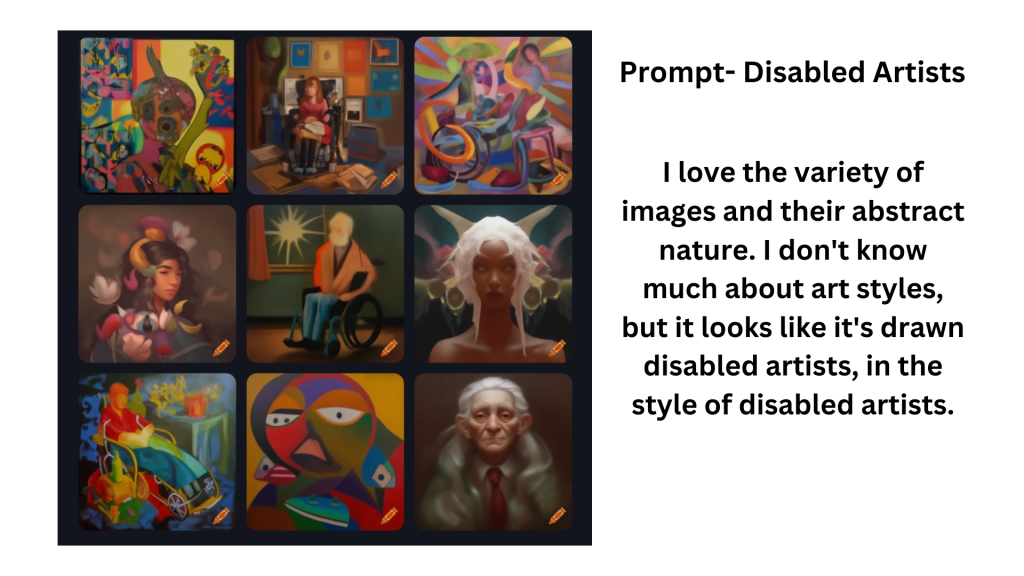
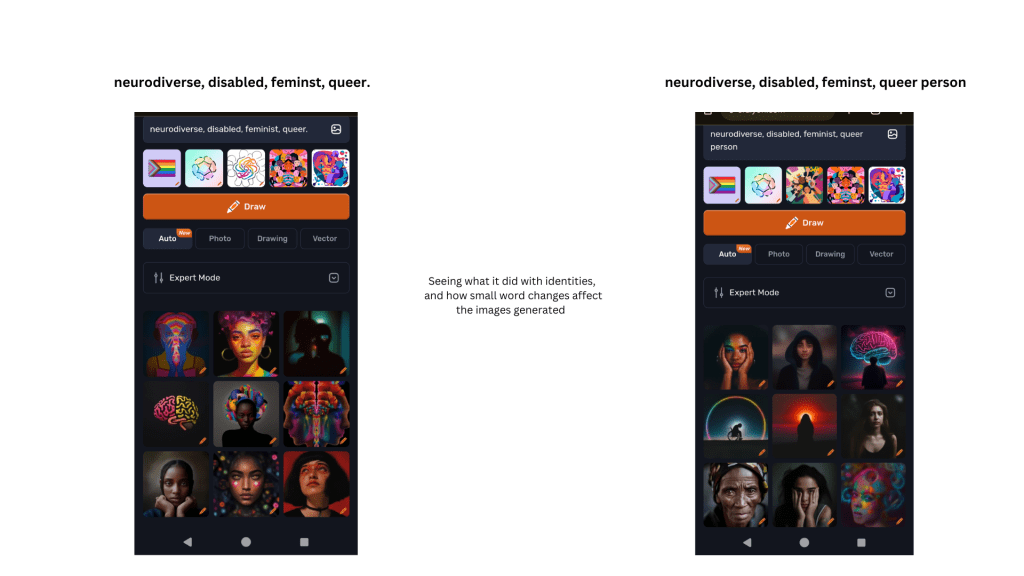
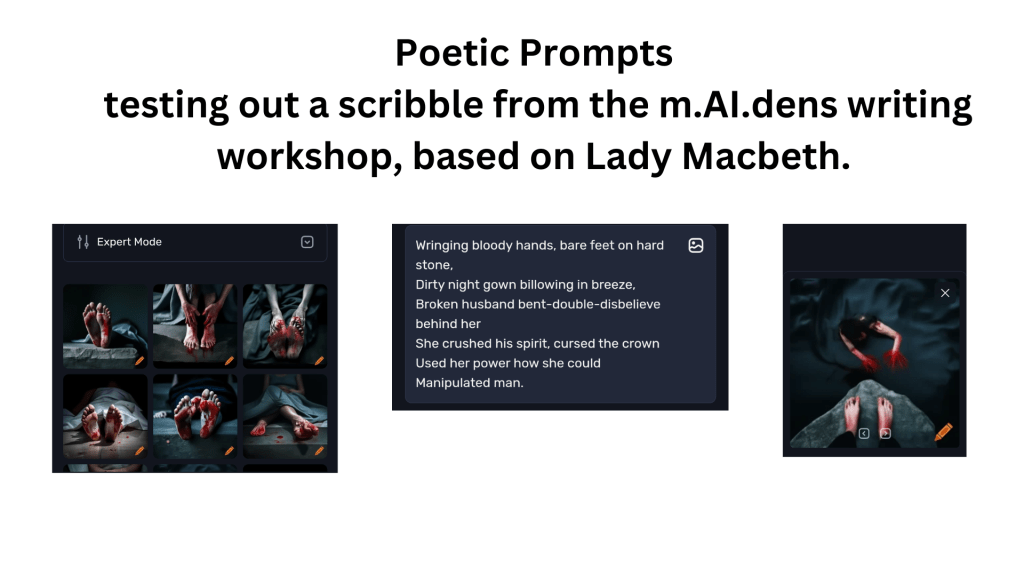
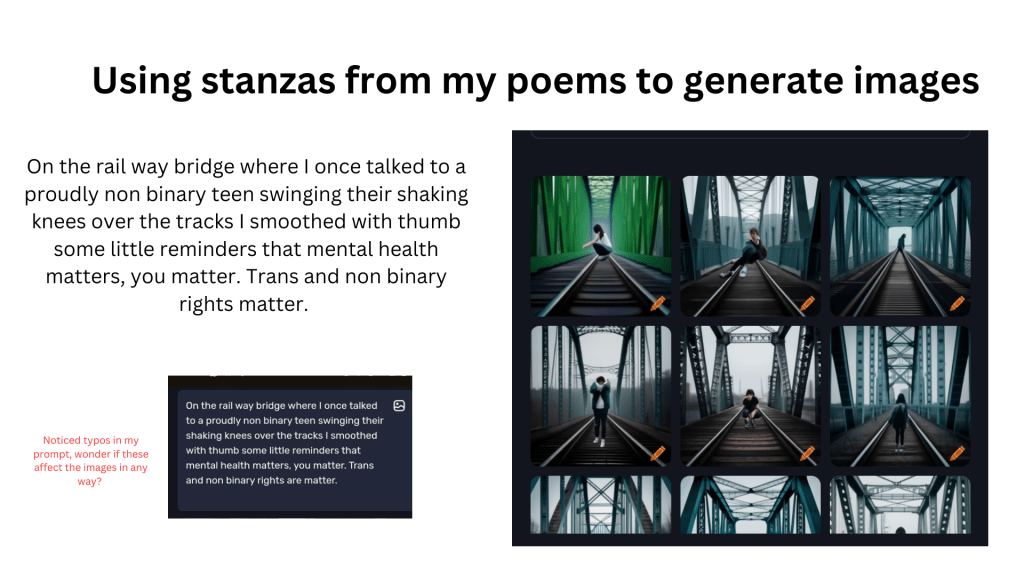
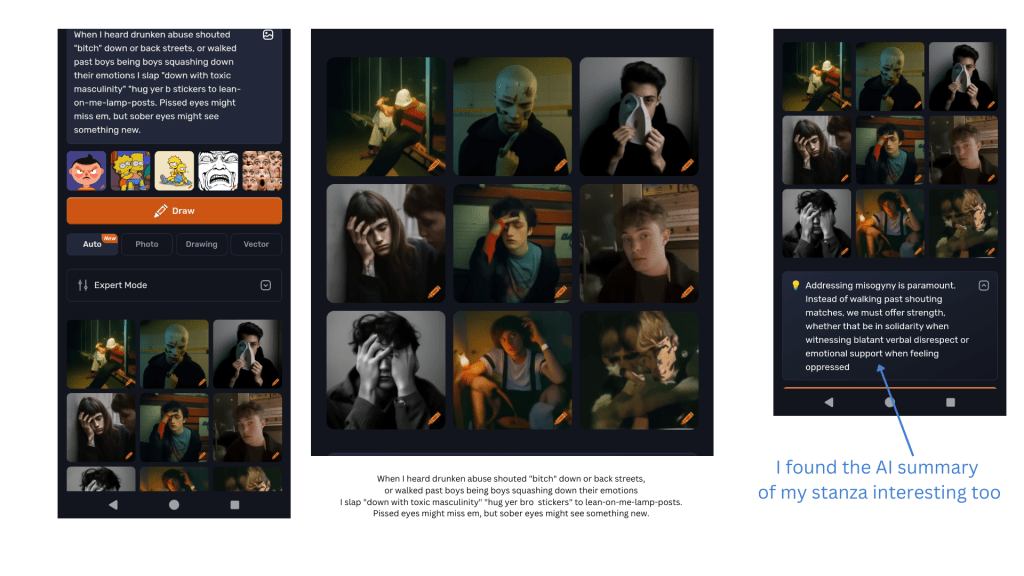
We hope you enjoy this piece by our digital producer, Humira Imtiaz – written with the assistance of Claude.ai & ChatGPT. Image cards and comments by Sarah Crutwell, generated using AI prompt “disabled artists” during Humira’s workshop on Coding mAIdens, and reflecting Sarah’s interest in disability, access and representation. Sarah is currently our poet-in-residence at MIMA, responding to Towards New Worlds, an exhibition of visual art by disabled and neurodiverse artists.
As creatives, writers and visionaries, we hold a unique power to shape the future of technology. Artificial intelligence (AI) offers new creative tools, but it also presents profound challenges – particularly with algorithmic bias, where AI systems reflect and amplify biases already present in society and within ourselves.
Why Does This Matter?
AI bias affects us all in ways we might not notice at first. For example, AI-driven hiring systems trained on biased data can favour certain groups over others, impacting job opportunities and workplace diversity. This is something that has already happened with Amazon’s now defunct AI recruitment tool, which taught itself male candidates were preferable, after being trained on mostly male CVs. Or AI-powered image generators, which may default to stereotypes in professional and/or domestic depictions, reinforcing narrow views that influence how we see ourselves and each other.
The issue extends beyond isolated examples. Biased AI outputs can influence perceptions, shape opportunities, and impact freedom of expression, embedding inequality in our digital experiences.
Now that the “Pandora’s Box” of AI is open, we cannot ignore it. This powerful tool is here to stay, and it’s up to us to ensure it promotes equality, not exclusion or dehumanisation.
How Can We Make AI Better?
We’re not just passive users of AI – we can challenge and transform the biases it may reinforce. Here are some actions to help create an inclusive & responsible AI landscape humanity’s future:
Steps to Shape an Inclusive and Sustainable AI Landscape
1. Educate Yourself
Understanding the basics of AI and how bias enters these systems is the first step. Organisations like the Algorithmic Justice League, Distributed AI Research Institute and AI Now Institute offer accessible resources to help people learn about AI bias and advocate for change. The Partnership on AI and Data & Society also share insights on how AI affects society. By learning about these issues, we’re better equipped to identify biases and make informed creative choices.
2. Amplify Diverse Voices
Creativity thrives on diversity. Seek out and support art, stories, and perspectives from underrepresented communities. For example, if you’re curating content or promoting work online, make a conscious effort to include diverse artists and storytellers, especially those whose voices are often overlooked. Expanding the range of voices in AI training data encourages a digital landscape that mirrors the richness of human experiences.
3. Create Inclusive Art
Challenge stereotypes in your work. Experiment with AI prompts and data sources that highlight marginalised perspectives & underrepresented stories. For instance, you could prompt an AI tool to depict non-traditional family structures, people of varying abilities in leadership roles, or diverse cultural celebrations. The more inclusive our creative choices, the more we can reshape AI to reflect a broader, richer view of humanity.
4. Mitigate Bias in Your AI Use
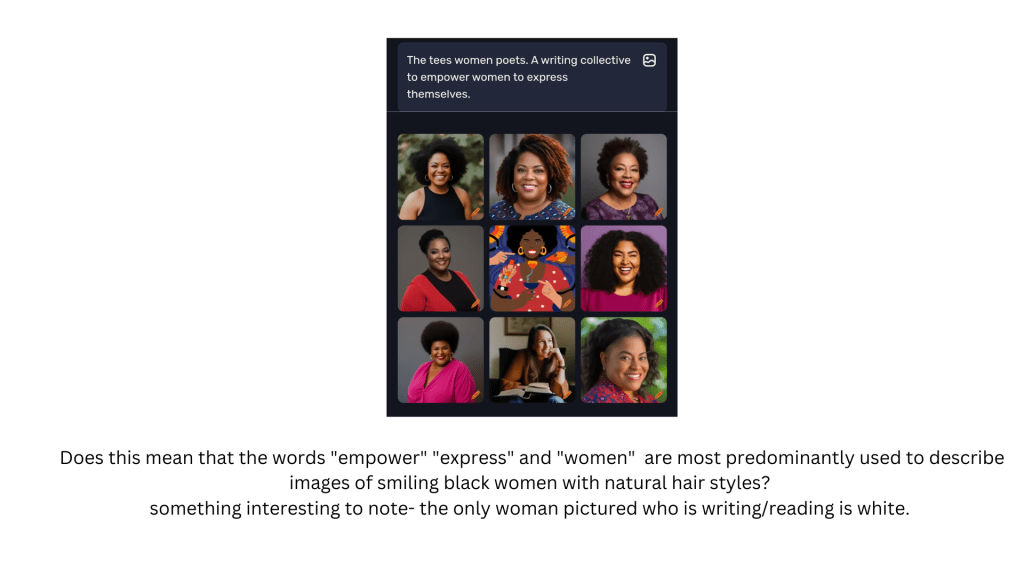
When using AI tools, critically examine outputs for diversity and inclusivity. To check for biases, try varying your prompts – for example, instead of “CEO,” try “Indonesian female CEO in a rural setting” or instead of “artist” use “Black artist with a visual impairment”. Basically, if you want to use AI, don’t use it absentmindedly as if you’re using a search engine – be specific. Be deliberate.
Take note of the AI’s results: are certain identities consistently underrepresented or stereotyped? This can reveal areas where the AI falls short, allowing you to adjust your approach and encourage more balanced outputs.
5. Consider the Environmental Impact of AI
AI processing requires a LOT of computing power, which means a notable carbon footprint. However, AI can also reduce environmental impact in cases where it speeds up tasks that would otherwise consume more time, energy & resources, such as complex data processing or digital art. Every AI choice, from image generation to content recommendation, has an impact. Let’s use this power responsibly by balancing AI’s benefits with its environmental costs and applying it thoughtfully.
6. Collaborate Across Disciplines
Our creative impact grows when combined with other fields. Partner with data scientists, ethicists, environmental experts, AND diverse communities to share knowledge and develop ways to reduce AI bias and its associated environmental impact. Collaborating with communities, not just experts, ensures that AI tools are shaped by a broad range of experiences, fostering a more inclusive digital landscape.
Real-World Examples of AI Bias
To understand why tackling AI bias is so crucial, consider a few real-world examples. Facial recognition systems often misidentify dark-skinned people (Buolamwini, 2017), which can lead to wrongful arrests and surveillance concerns. Language models trained on biased data have been shown to produce text that reinforces stereotypes, such as associating certain professions with one gender or even reframing current geopolitical events (1)(2). Unsurprising, when an analysis of data sources that feed ChatGPT revealed that less than 15% of Wikipedia contributors were women or girls, only 34% of Twitter users were women, and 67% of Redditors were men (Gebru et al, 2021)
These are not just technical glitches; they have real impacts on individual lives and communities. By actively addressing AI bias, we can help prevent these issues from becoming normalised in our society.
A Collective Call to Action
Our digital canvas should reflect us all. AI is already reshaping how we see and engage with art, culture, and each other. By addressing AI bias and its environmental impact, we take control of these tools, ensuring they empower rather than exclude. The future of AI can be inclusive, sustainable, and beneficial for everyone—if we work together.
Join us in this mission. Let’s use our creativity to shape a future where AI supports the diversity and sustainability we all need. Together, we can make AI a powerful ally for good.

